
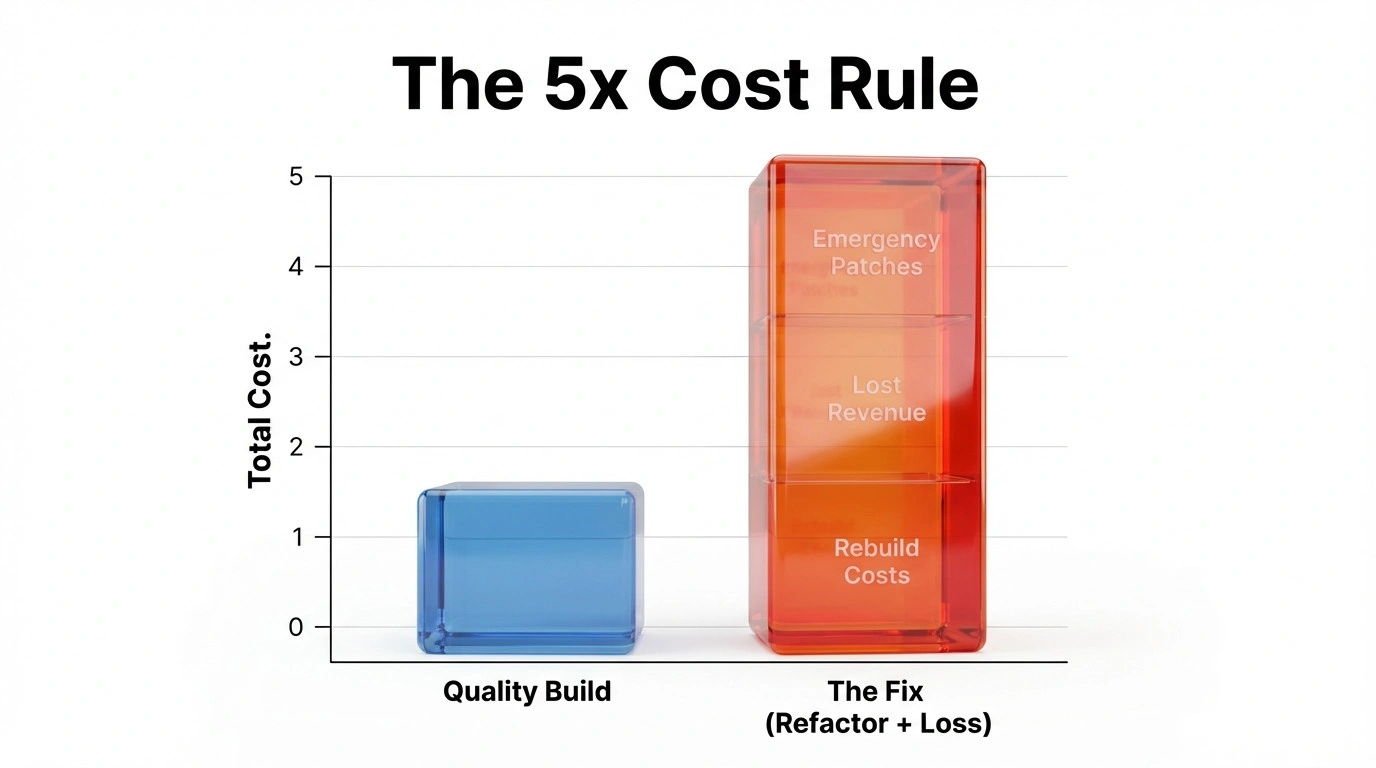
A low development quote is not automatically poor value. The risk appears when the quote leaves out work the business later needs, or when nobody can explain what has been built and how to operate it. The initial fee is only one part of the cost of a website.
Where costs move later
- Unclear scope: missing content, integrations, redirects, accessibility requirements or testing can become paid change requests.
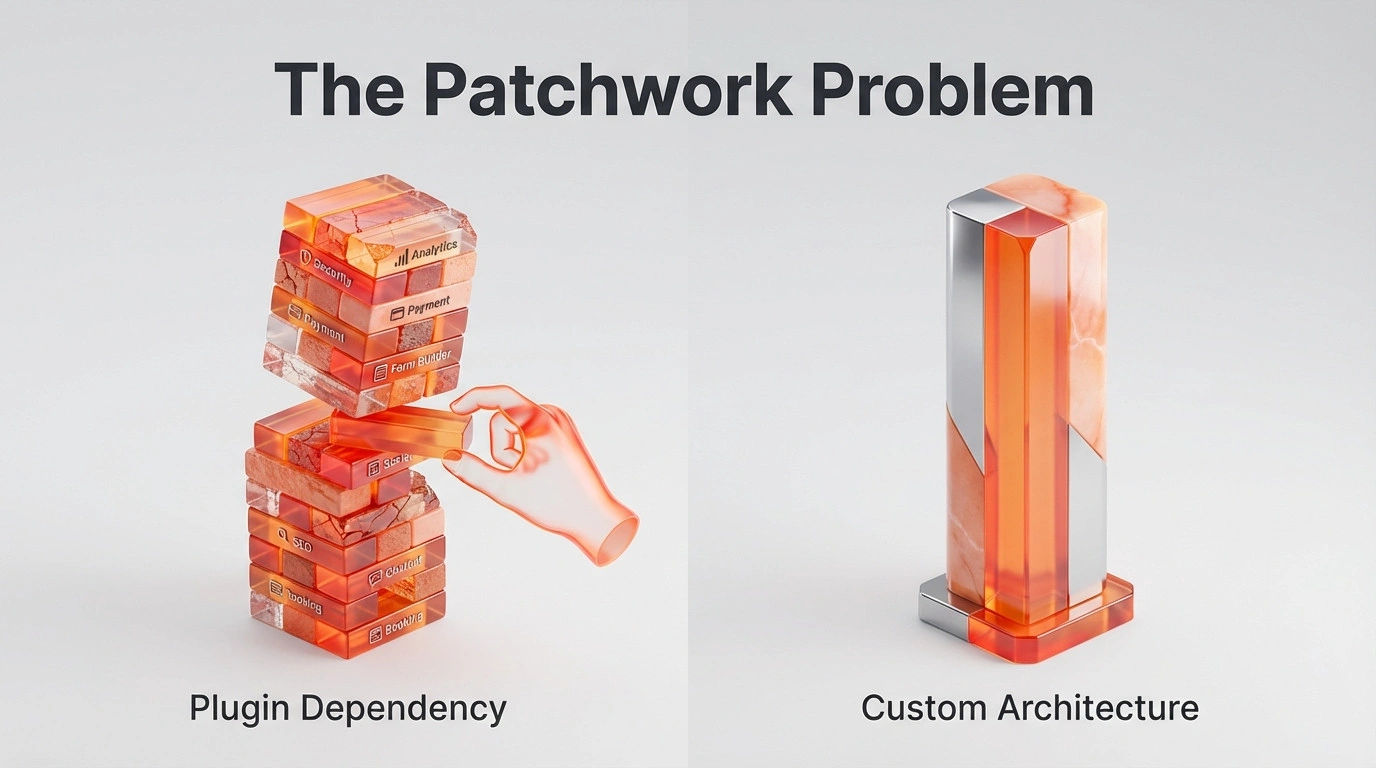
- Fragile implementation: tightly coupled templates, undocumented custom code or abandoned dependencies make routine updates harder.
- Limited access: if the client does not control the domain, hosting, source files and key accounts, a supplier change can become a costly migration.
- Weak testing: failures in forms, checkout, analytics or mobile layouts may only appear after launch, when repair also affects live operations.
- No maintenance plan: software updates, backups, monitoring and incident response still need an owner after the project ends.
These are risks to check, not inevitable results of choosing a lower-cost supplier. A smaller project can be built well when the requirements are clear and its limits are explicit.
Compare the full delivery

Before selecting a proposal, ask each supplier to define the deliverables, exclusions, acceptance criteria, content responsibilities, revision limits and launch support. Confirm who registers and controls the domain, hosting, analytics, licences and source files. Ask what documentation and credentials are handed over, how backups and updates are handled, and what happens if the relationship ends.
Separate the one-off build from recurring costs. Include hosting, paid licences, support, content changes and future development in the comparison. Check how the site can be transferred and whether another qualified team can maintain it. A useful handover reduces dependency; it does not mean that ongoing specialist support will never be needed.
Make the decision on fit
Compare proposals against business requirements and operational capacity. A lower quote may suit a simple site with a narrow scope. A complex organisation may need more discovery, integration work, security controls and governance. If a proposal does not show how those needs will be met, request clarification before comparing totals.
The sensible question is not “Which quote is cheapest?” It is “What will this cost to run, change and own over time, and who is responsible at each stage?”