
Google Maps visibility depends on the search, the business and the searcher’s location. A business may appear prominently in one part of Kuala Lumpur or Penang and lower down elsewhere. There is no setting that guarantees a top position, and Google says businesses cannot request or pay for a better local ranking.
The practical work is to represent an eligible business accurately, make its services and location clear, and earn genuine signals of prominence over time.
How local results are determined
Google says local results are mainly based on relevance, distance and prominence.
- Relevance describes how well a Business Profile matches the search. Accurate, complete information helps people and Google understand the business.
- Distance is how far the business is from the searcher or the location named in the query. A business cannot legitimately edit its way around this factor.
- Prominence reflects how well known the business is. Google says it may consider information such as links and reviews, along with other information about the business.
These are broad descriptions, not a complete ranking formula. Do not treat a third-party audit score or a rank-tracker grid as Google’s official result.
1. Check eligibility and ownership
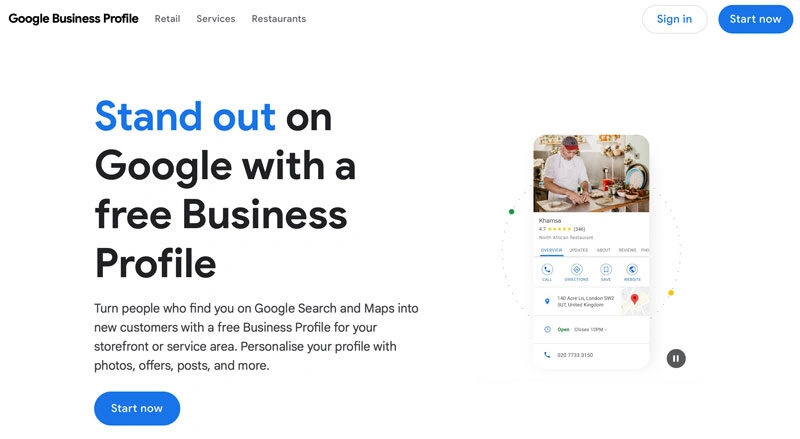
A Business Profile is intended for businesses that have in-person contact with customers during their stated hours, subject to Google’s eligibility rules. Online-only businesses and lead-generation companies are among the examples that are not eligible.
The business owner should retain ownership of the profile and grant access to authorised staff or providers. Do not create a listing at a virtual office, borrowed address or location where the business is not eligible. Follow Google’s current rules for storefronts and service-area businesses, including how to display addresses and service areas.
2. Keep the profile accurate
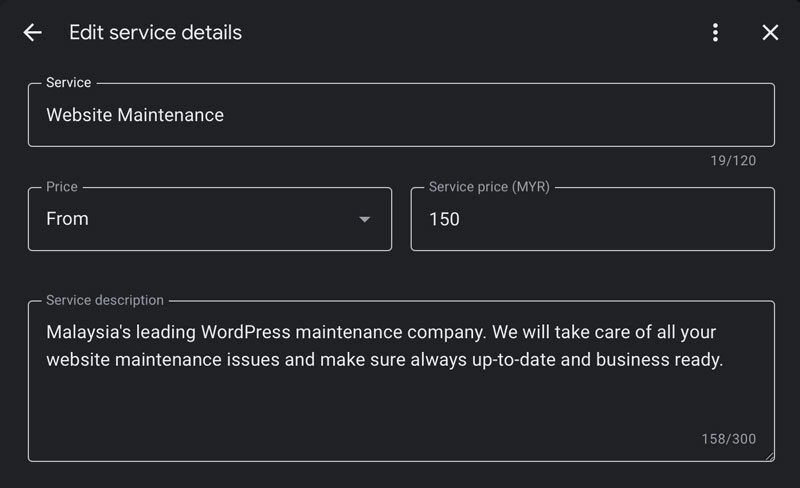
Verify the profile and maintain the real-world business name, address or service area, phone number, website, hours and attributes. Choose the closest accurate primary category and add relevant additional categories only when they describe services the business actually provides.
Do not add keywords, locations or service claims to the business name unless they are part of the real-world name. Do not create multiple profiles to target nearby towns when there is no eligible staffed location for each one. Such shortcuts risk confusing customers and breaching profile rules.
Add current photos that show the actual premises, team, products or work. Avoid stock images presented as the business’s own work and heavily altered images that misrepresent what customers will find.
3. Ask for honest reviews
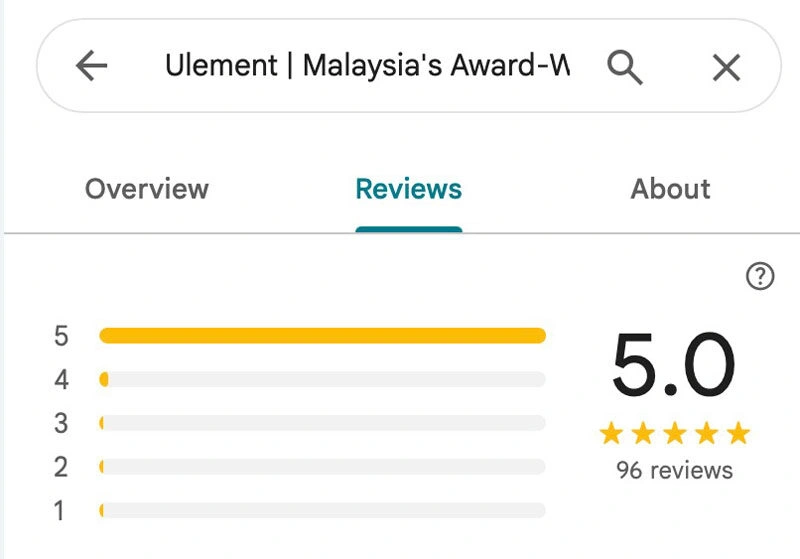
Invite customers to leave an honest review after a genuine interaction. Do not offer discounts, gifts or other incentives, ask only satisfied customers, pressure people to include particular wording, or ask staff and contractors to review the business. Reply calmly and avoid revealing private customer information.
Reviews can help customers assess a business, and Google lists review count and ratings among information that may contribute to prominence. They do not guarantee a position. A steady process for asking all customers is safer than a short review campaign.
4. Make the website support the profile
Use the business’s authoritative website and contact details. Explain the services actually offered, the locations the business can serve, and how customers can make an enquiry. A useful location or service page should contain information for that audience, not a copied template with only a town name changed.
Keep the website’s name, address and phone details consistent with the profile where applicable. Link to the correct location page. Structured data such as LocalBusiness can describe visible business information in a machine-readable form. It must match the page and does not override distance or guarantee a Maps position.
Local links and mentions may help people discover a business and can contribute to the wider information Google has about it. Seek relevant editorial, community and supplier references. Avoid paid link schemes and bulk directory submissions that exist only to manipulate rankings.
5. Measure visibility fairly
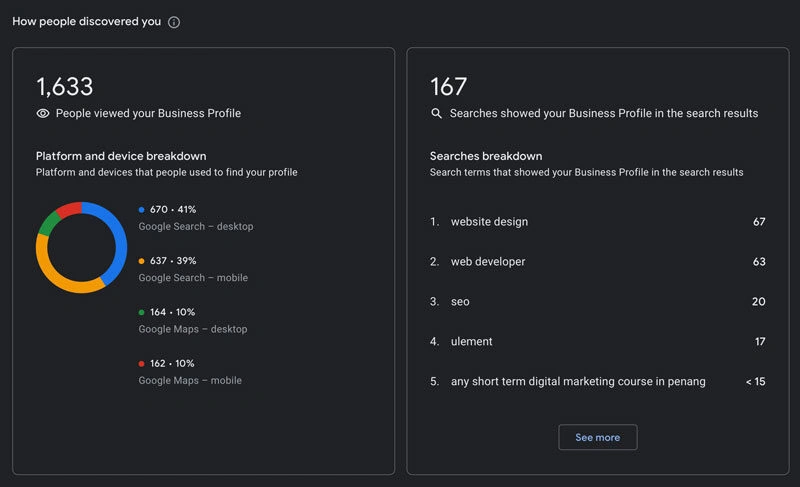
Search results vary by search term, location, device and time. Record a small set of important customer searches and service areas, and check them periodically from consistent locations. Treat rank grids as directional comparisons, not exact measures of every customer’s result.
In the Business Profile performance report, review available searches and customer actions such as calls, website clicks or direction requests. Compare those signals with website analytics and qualified enquiries. A change in profile views does not automatically mean more sales.
Common problems to avoid
- Using a profile for a business that does not meet eligibility rules.
- Adding keywords or nearby towns to the business name.
- Listing a virtual, unstaffed or ineligible address.
- Buying reviews, giving incentives or filtering requests to seek only positive reviews.
- Publishing thin location pages with duplicated copy.
- Expecting a profile edit, review target or paid agency engagement to guarantee a ranking.
Frequently asked questions
Can a business pay Google to rank higher in Maps?
No. Google says there is no way to request or pay for a better local ranking. Advertising is separate from organic local results.
Should a service-area business hide its address?
Follow the current Business Profile instructions for the business model. A business that travels to customers may need to show its service area and hide an address where customers are not served. Do not publish a residential or virtual address just to appear in another area.
Do more reviews guarantee a top position?
No. Google lists reviews as one source of prominence information, while distance and relevance also matter. Reviews should reflect real customer experiences and follow the platform’s rules.
Should every target city have a separate page?
Only when the business can provide genuinely useful, distinct information for that location. A set of near-identical doorway pages can create a poor experience and does not establish a real local presence.
Conclusion
Keep the profile eligible and accurate, make the website useful for the customers and areas the business really serves, and earn genuine reviews without incentives. Track customer actions as well as visibility. Google Maps rankings vary by location, and no provider can promise a fixed position.
Sources checked on 20 October 2026: Google Business Profile guidance on local ranking, eligibility and ownership, representing a business, and review content policies.