
Healthcare SEO should help a patient understand a service, location and next step without overstating clinical outcomes. Build accurate service pages, useful local information and accountable review into the publishing process. Search visibility is useful when it supports informed enquiries and respects privacy and current advertising requirements.
This guide is for clinics and healthcare practices reviewing their website and search programme. It is not clinical, legal or regulatory advice. Have qualified medical and compliance reviewers approve patient-facing claims before publication.
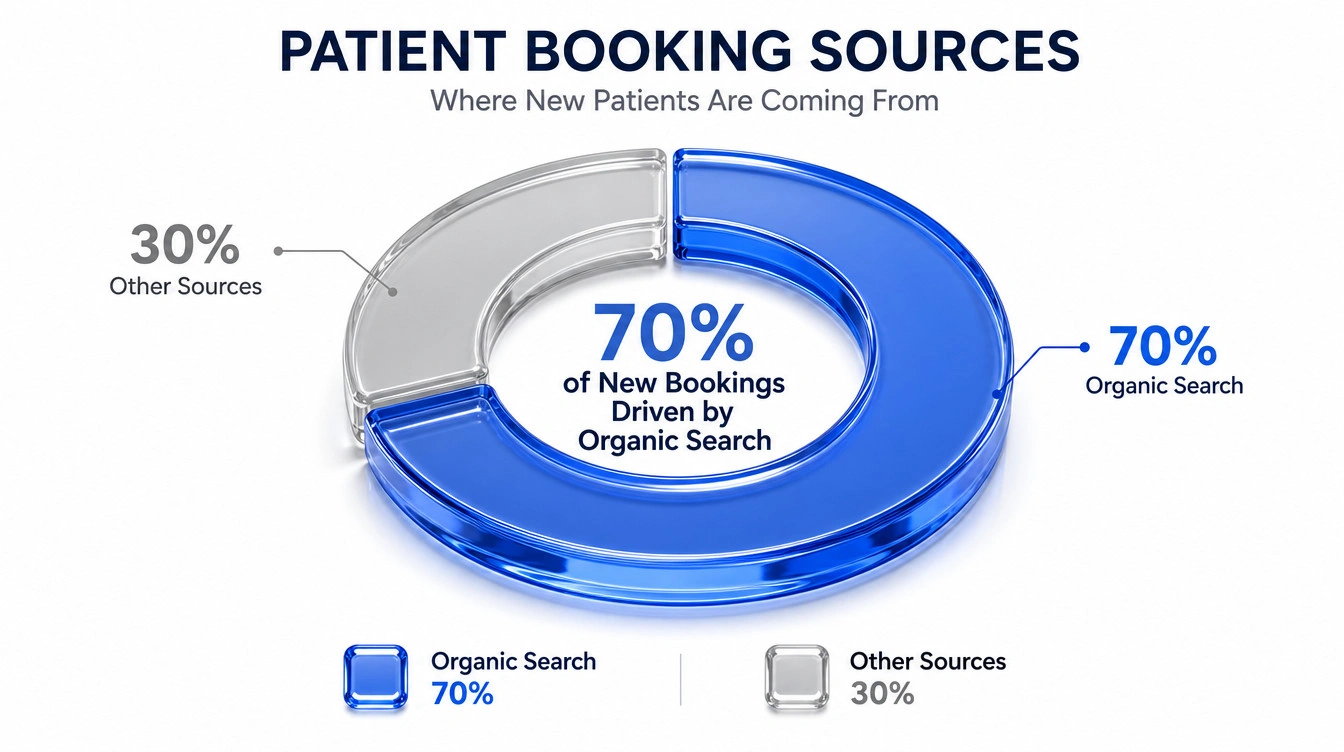
What healthcare SEO can and cannot do
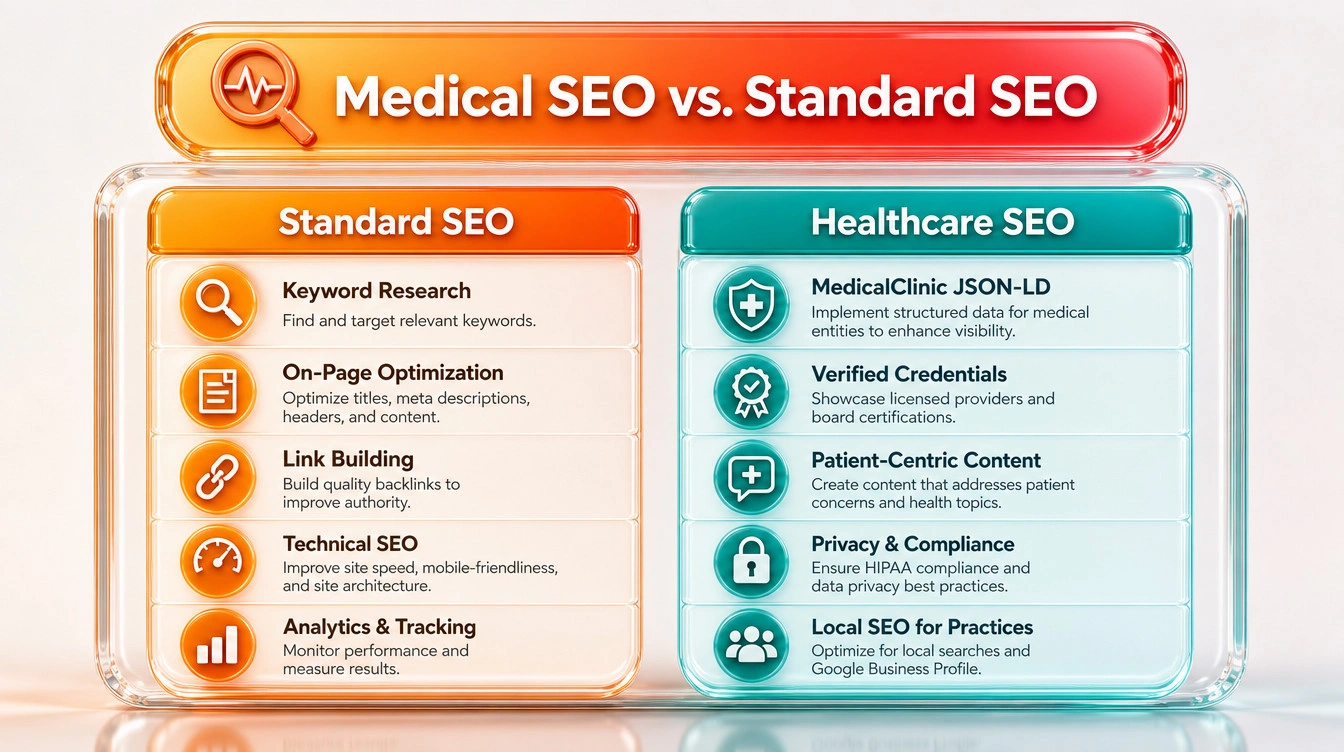

SEO can improve how clearly a website explains its services and how easily people and search systems find its pages. It cannot diagnose a patient, establish practitioner credentials by itself, guarantee patient enquiries or control a search result.
Start with the patient task. Someone comparing dental care, a medical consultation or an aesthetic procedure needs clear information about the service, practitioner, location, suitability and how to ask questions. The page should help a person decide whether to contact the practice, not pressure them into treatment.
Build service pages around accurate information
Create a distinct page when the practice offers a real service and can provide useful, reviewed information about it. Explain what the service involves, who provides it, where it is available, what a patient can expect from the consultation and how to make an enquiry.
Clinical claims, benefits, risks, eligibility and outcome descriptions must come from qualified practitioners and current evidence. Do not promise results, imply a procedure is risk-free, use unsupported superlatives or present a general explanation as a diagnosis. Add a named reviewer or author only when the person has approved the content and the attribution is accurate.
Keep service scope and practitioner details current. Check names, roles, qualifications, registration details, locations, hours and contact routes with the practice before publishing. Remove outdated services and mark information that is no longer offered.
Make local information dependable
Use consistent practice names, addresses, phone numbers, service areas and opening hours across the website and eligible business profiles. Give each location a useful page with details that help a patient plan a visit. Do not create near-identical city pages for locations the practice does not serve.
For Google Business Profile, confirm eligibility, ownership and categories, and follow current profile rules. Invite genuine feedback without incentives or selective filtering. Reply without revealing a patient’s identity, treatment or health information.
Establish a sound technical foundation
Ensure important pages load, can be crawled and indexed, and work on mobile. Keep navigation, appointment paths, forms, maps and contact details usable. Check page speed and Core Web Vitals as user-experience measures; a good score does not guarantee a search position.
Use descriptive titles, headings and internal links. If the site has different language versions, use separate URLs, accurate page language, reciprocal hreflang references and self-referencing canonicals. Test that each version contains a complete, reviewed patient journey.
Structured data can present visible page meaning to crawlers in a more organised, machine-readable form. It must match what the page says and shows. Use only types and details that accurately describe the practice. Markup does not establish a clinician’s credentials or guarantee rankings, rich results or AI citations.
Review advertising, privacy and measurement
Online healthcare promotion may be subject to rules that depend on the service, practitioner, facility, content and audience. Before publishing, have an appropriate Malaysian compliance reviewer determine which current requirements apply, including Medicine Advertisements Board and Malaysian Medical Council guidance where relevant. Keep approval records with the content.

Protect patient information in forms, analytics and marketing integrations. Do not place symptoms, diagnoses, treatment details or other sensitive information in URLs, analytics events or advertising audiences. Collect only what is needed for an enquiry, explain how it will be used and have the practice approve the data flow.
Measure qualified enquiries, calls, appointment requests and completed bookings where the practice can track them appropriately. Separate new-patient enquiries from existing-patient support and other contacts. Use aggregate reporting where possible and avoid treating page views as clinical or commercial success.
Choose a provider by accountability
Ask an SEO provider how clinical content will be reviewed, who owns accounts and analytics, how technical findings will be prioritised, and what the practice must approve. Request clear deliverables, dependencies and reporting. No provider can guarantee rankings, AI citations or patient outcomes.
Scope and timing depend on the site’s condition, locations, service range, content review, technical work and the practice’s approval process. Set a baseline and agree a review cadence rather than using a generic schedule or outcome promise.
Common risks to avoid
- Publishing clinical claims without practitioner review and evidence.
- Treating E-E-A-T as a checklist or single ranking factor. It is a set of qualities Google’s systems aim to recognise; it does not replace accurate medical review.
- Creating location pages for clinics or areas that are not actually served.
- Collecting sensitive patient data through analytics or advertising tools without a reviewed data plan.
- Using patient reviews, photographs or case details without appropriate permission and compliance review.
- Promising that schema, technical SEO or a fixed number of pages will produce rankings or patient enquiries.
Frequently asked questions
Can healthcare SEO guarantee rankings, AI citations or patient enquiries?
No. SEO work can improve the website and its discoverability, but search systems and patient decisions are outside a provider’s control. Agree measurable work and review actual enquiries without promising a result.
Who should review medical website content?
The relevant registered healthcare professional should review clinical accuracy. A qualified compliance adviser should assess applicable advertising, privacy and professional requirements for the specific content and service.
What should a clinic measure?
Measure appropriate actions such as qualified enquiries, calls, appointment requests and completed bookings. Review the collection and reporting of patient information with the clinic’s privacy and compliance owners.
Conclusion
Responsible healthcare SEO joins accurate clinical information, usable technical delivery, local discovery, privacy and accountable review. Make the patient decision clearer, keep claims within approved evidence and measure enquiries in a way the practice can govern.
Sources checked on 20 October 2026: Google’s people-first content guidance, structured-data policies, the Malaysian Ministry of Health’s Medicine Advertisements Board guidance and the Malaysian Medical Council’s 2025 information-dissemination guideline.