
A competitor analysis is useful when it explains why another page serves a search better and what your organisation can credibly improve. It is not a template for copying headings, word counts or backlinks. Search results are evidence of what appears for a query, not proof of why a page ranks.
Key takeaways
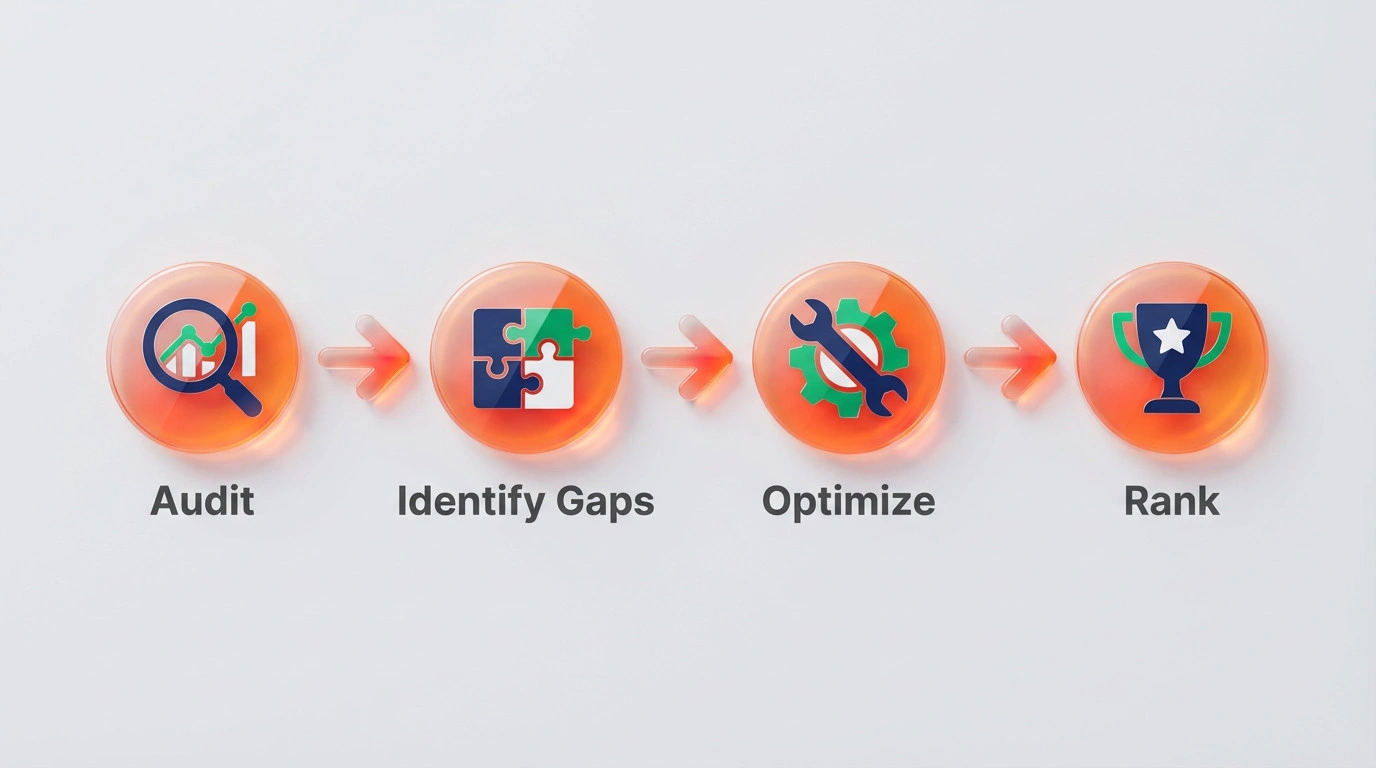
- Separate commercial competitors from websites that compete for the same search.
- Compare groups of pages, intent, evidence and usability, not one keyword in isolation.
- Turn findings into a short list of tests with a recorded baseline.
Choose the competitors and questions
Start with a service, audience and location that matter to the business. Review the search results for a representative set of queries. Some results may be directories, publishers or marketplaces rather than direct competitors. Record which sites repeatedly meet the same need, then compare them with your own relevant pages.
Use Search Console to understand your site’s queries, pages, impressions and clicks. Third-party tools can estimate competitors’ keywords and links, but those are estimates, not access to their analytics. Keep the source and date of each comparison so another person can repeat it.
Compare page groups
For each query group, note the intent, page type, information offered, evidence, internal links and next step. Ask whether your page answers the decision a visitor is making. A service page, comparison, guide and local listing solve different problems, even when they share a phrase.

Check technical access on your own site: indexability, canonical signals, mobile layout, internal discovery and real-user experience data. PageSpeed Insights can provide field data where available and lab diagnostics for a tested page. You cannot see another site’s private Search Console or field data, so do not present a third-party estimate as a verified result.
Turn findings into a plan
Prioritise gaps by audience importance, evidence, effort and risk. Possible actions include clarifying a service page, consolidating overlapping articles, improving a useful existing guide or fixing crawl and rendering problems. Do not create a page simply because a competitor has one.
Record the current state, owner, change and review date. Measure relevant impressions, qualified visits and enquiries alongside technical indicators. Search changes take time to be crawled and reassessed; no analysis can guarantee a position or a fixed timetable.
Common questions
Does a competitor ranking first prove its page is better?
No. Search results reflect many signals and vary by query, location and time. Use the result as a prompt to investigate, not as a causal diagnosis.
Should we copy a competitor’s backlink profile?
No. Google’s spam policies prohibit buying links or building patterns intended to manipulate rankings. Review links to understand genuine industry relationships and useful references.
What should a WordPress team change first?
Fix a verified issue that blocks access, clarity or a useful visitor task. The right change depends on the page and evidence, not on a universal competitor checklist.