A clinic improves Google visibility by making services, practitioners, locations and evidence easy to verify. Useful patient information and local consistency matter more than aggressive claims. Medical content also needs accountable review, privacy safeguards and alignment with current professional and advertising requirements.
Key Takeaways:
- Publish accurate service and practitioner information with accountable review.
- Keep location details consistent across the website and trusted profiles.
- Avoid guaranteed outcomes, exaggerated claims and unnecessary patient-data collection.
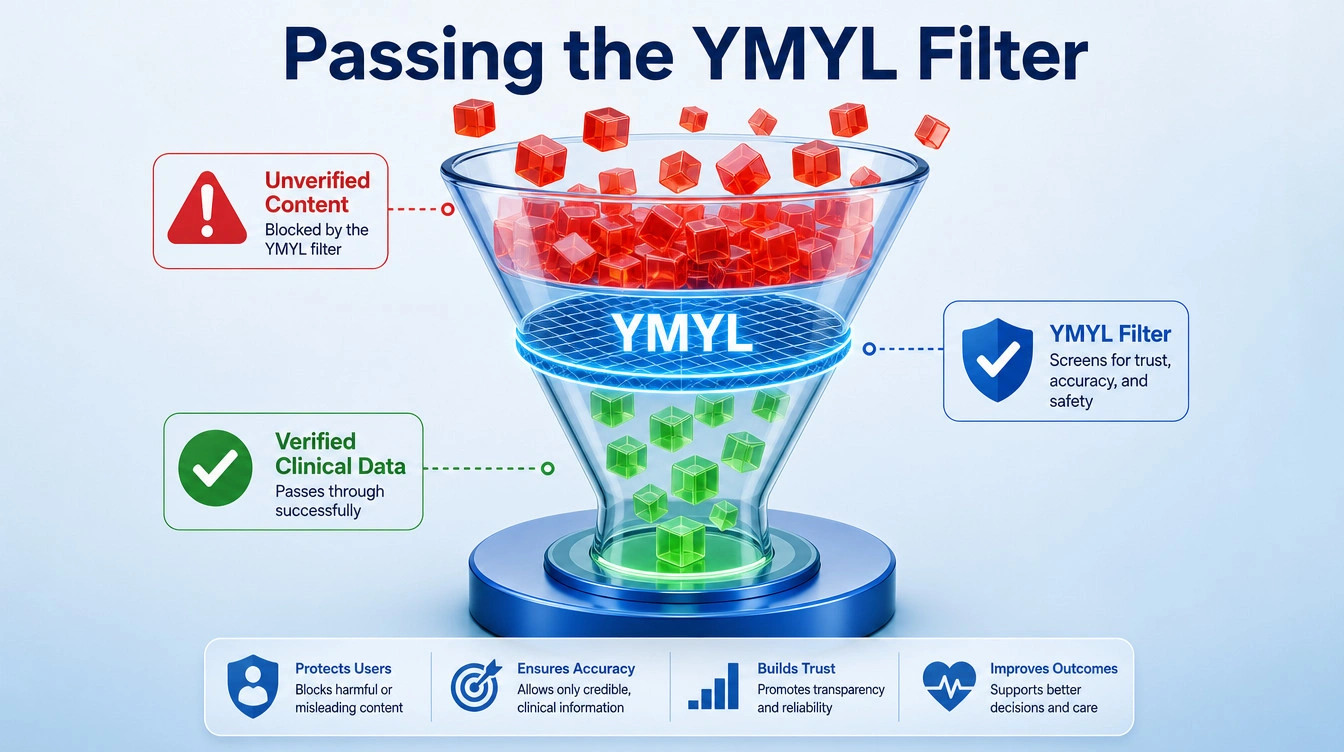
Overlay Text: “Passing the YMYL Filter”
What Exactly Are YMYL and E-E-A-T?

YMYL stands for “Your Money or Your Life.” Google uses this term for web pages that can change how happy, healthy, or safe you feel. These pages can also have an effect on your financial stability. If you see any page on a clinic, dental surgery, or medical aesthetics website, that page will be in this YMYL group.
To keep YMYL pages safe, Google uses a system. The name of this system is E-E-A-T:
- Experience: Does the writer have real practice with this topic? For example, did a dental surgeon write about root canals?
- Expertise: Does the writer have the right skills and credentials?
- Authoritativeness: Are the person or the clinic known in their field as someone people trust for help with this subject?
- Trustworthiness: Is the website safe? Does it give the facts that are true, and is it clear about who wrote it? This is the most important one.
In healthcare marketing, you can’t just say you are trustworthy. You have to show proof. You need clear and easy-to-check digital records in healthcare.
Step 1: Crafting Author Bios That Prove Expertise
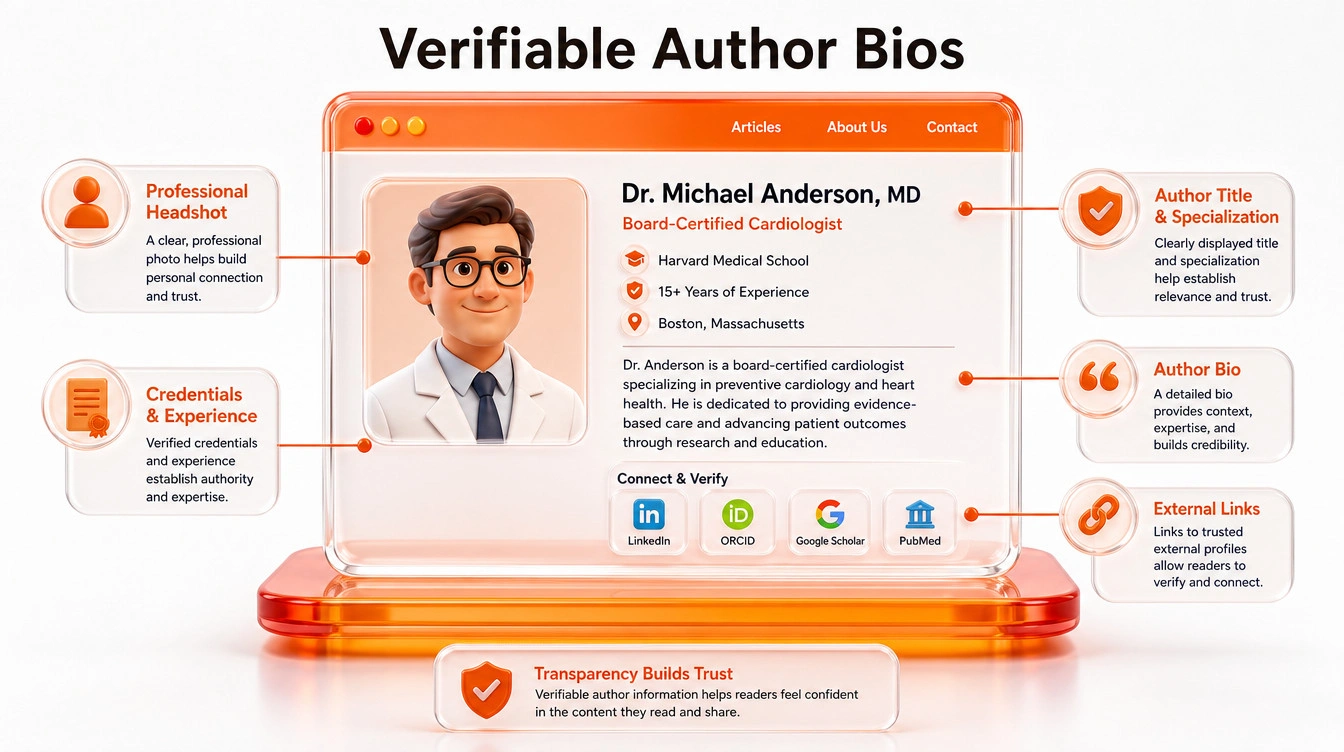
One big mistake that a lot of clinics make is putting out their content with simple names like “Admin” or “Clinic Team.” The algorithms do not know who “Admin” is. So, this makes the people feel no trust in the content.
Each page that talks about medical services needs to be linked to a skilled expert. The same is true for any article that helps people learn about health. Connecting to the expert is key.
How to structure a high-trust author bio:
- Full Name and Titles: Put the doctor’s full name and all the titles they have. For example, write Dr. Jane Doe, BDS, MSc Orthodontics.
- Real-World Experience: Share how many years the doctor has worked. Say what they do and their main area in practice.
- Headshot: Add a clear, good-quality photo that looks professional.
- Dedicated Profile Page: Add a link to the doctor’s full profile page on your website at the end of the bio. People can read more there about where they went to school, awards they have, and their certificates.
Step 2: Citing Medical Journals and Scholarly Articles
Being open about where you get your information is a big part of building digital clinical trust. For example, if your dental clinic puts out a page about how safe teeth whitening is, you should show proof. In the same way, if your GP clinic puts out something about how to manage blood pressure, you should support your statements. Always give proof for what you say.
Search engines look at the websites your site connects to. If you link to trusted and well-known websites, it shows that your content has been checked well. This means your information is more likely to be trusted, and it is based on good research.
- Use External Citations: If you talk about health or medicine, make sure to link to a trusted site. You can use PubMed, World Health Organization (WHO), or top medical schools to add your citations.
- Avoid Unsupported Claims: Do not use words like “guaranteed cure” or “100% safe.” This can get a message blocked as spam. Instead, speak about what you do by sharing facts, likely results, and give clear medical details.
Step 3: Entity Verification and National Registries
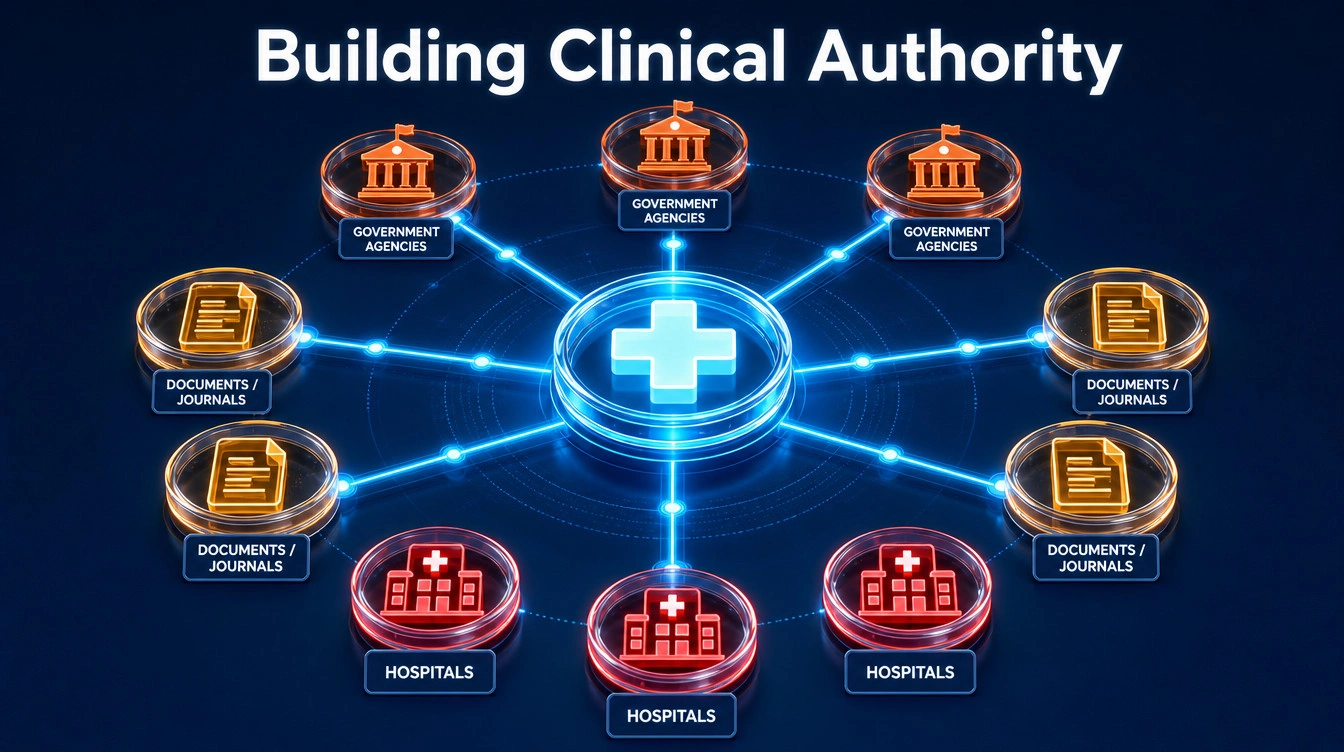
Artificial intelligence and today’s search algorithms use “entities.” These mean trusted digital people and ideas. To show real authoritativeness, you need to link your website’s doctors to well-known databases outside your website.
The MMC Connection: In Malaysia, doctors must sign up with the Malaysian Medical Council (MMC) or the Malaysian Dental Council (MDC). This means they can work as a doctor in the country.
- List the MMC registration numbers of your team members on their profile pages.
- If you can, add a link to show the details are right on the national registry.
- Give a link to their profiles on any hospital boards or professional groups, for example, the Malaysian Medical Association.
When you gather all the checked info, you make a Knowledge Graph for your doctors. The search engine is not just finding a name. It can see there is a real doctor who is registered and has good training. This is a big part of doing well in YMYL.
Are You Losing Patients to Less Qualified Competitors?
If your clinic does well with medical work but people can not find it on the internet, your website might not meet Google’s YMYL rules. It is important to know where your trust signals are weak online.
Stop losing patients who want your help. Ulement builds strong healthcare SEO that tells search algorithms about your real skills in healthcare.
Book Your Complete Site Audit & Analysis with Ulement Today and get a data-driven roadmap to secure your digital reputation and lead local search.
Conclusion
Useful improving a medical clinic’s Google visibility must earn trust before it earns traffic. Keep clinical review, privacy, technical quality and current compliance advice inside the publishing process. Measure whether the website helps suitable patients make informed contact, not whether it produces the largest possible audience.
Frequently Asked Questions
Can improving a medical clinic’s Google visibility guarantee rankings, AI citations or patient enquiries?
No. Search visibility depends on competition, platform changes and the quality of the underlying information. The responsible goal is clearer discovery and more useful patient processes, not guaranteed outcomes.
Who should review medical website content?
Use an accountable reviewer with appropriate clinical knowledge. Current advertising, professional and privacy requirements should be checked with qualified advisers for the markets where the clinic operates.
What should a clinic measure?
Track qualified appointment enquiries, useful local visibility and successful patient processes while minimising sensitive data collection and documenting the limits of attribution.
For the delivery scope behind this issue, see Ulement’s technical SEO service.