Many Malaysian businesses delay website maintenance because the cost feels optional. The invoice only looks unnecessary while nothing is broken. Once a failed update, expired service or missing backup interrupts the site, recovery costs more than routine care.
Key Takeaways:
- Basic Malaysian SME websites require RM 300 to RM 800 monthly for secure, baseline maintenance.
- E-commerce and enterprise platforms need RM 1,500 or more monthly to manage FPX payment gateways and database optimisation safely.
- Hosting, SSL certificates, and server management form the required core of any technical upkeep budget.
Breakdown of Core Infrastructure Expenses
Understanding where your money goes is the first step in financial planning. The foundation of any website relies on domain registration, server hosting, and security certificates.
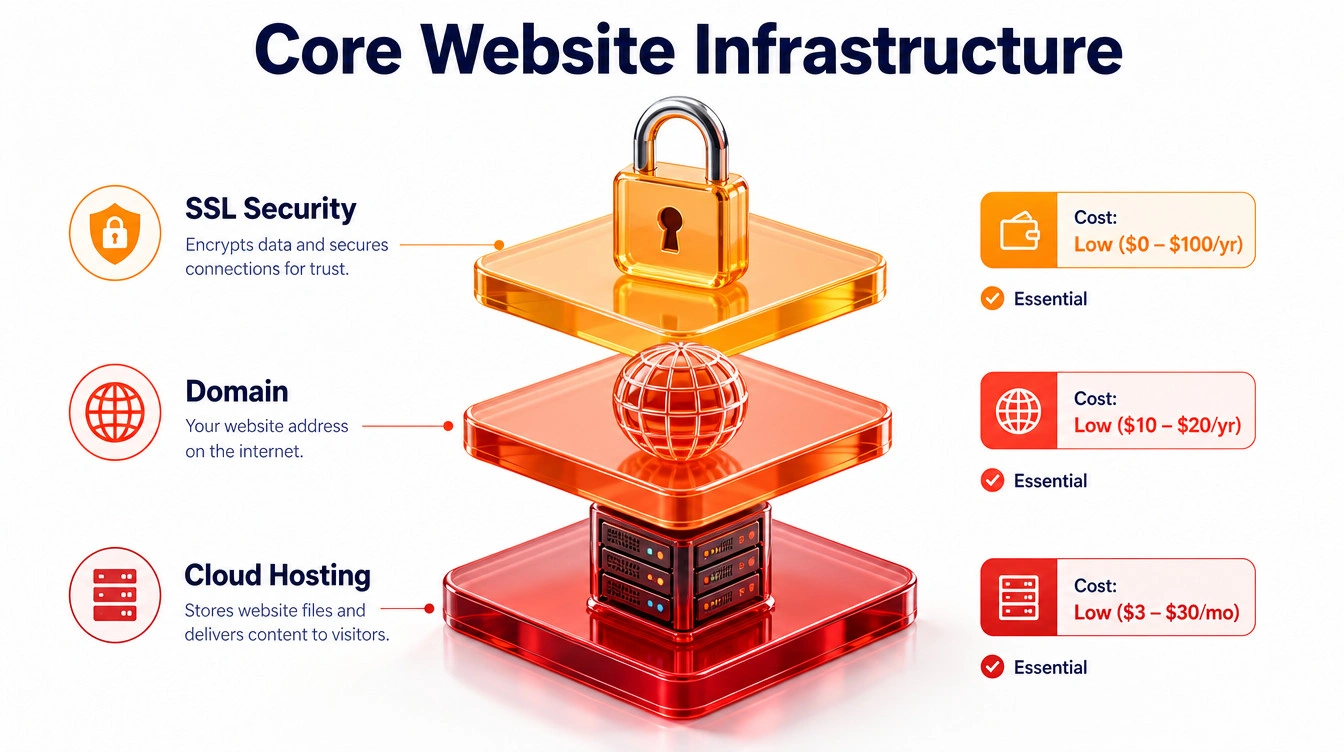
Malaysian domains (.com.my or .my) generally cost between RM 80 and RM 200 annually. They provide excellent local credibility for businesses registered with the Companies Commission of Malaysia (SSM). Hosting is a larger variable. While shared hosting starts at RM 40 per month, it often struggles with performance. We recommend VPS (Virtual Private Server) or Cloud hosting for serious businesses. Cloud solutions offer redundancy, ensuring your site stays online even if one physical server fails.
Security is another baseline cost. While Let’s Encrypt provides free SSL certificates, premium certificates with extended validation can cost up to RM 1,000 annually for large corporate entities.
| Infrastructure Item | Average Cost Range | Necessity Level |
|---|---|---|
| Domain Renewal (.my) | RM 80 – RM 200 / year | Mandatory |
| Cloud / VPS Hosting | RM 500 – RM 10,000 / year | Mandatory |
| SSL Certificate | Free – RM 1,000 / year | Mandatory |
| Server Management | RM 300 – RM 5,000 / month | Highly Recommended |
Q: Can I run a business site on basic shared hosting?
A: While possible, we usually advise against it for scaling businesses. Shared hosting limits your server resources, which can severely slow down your site during traffic spikes and negatively impact your local search rankings.
What Do Monthly Maintenance Tiers Actually Include?
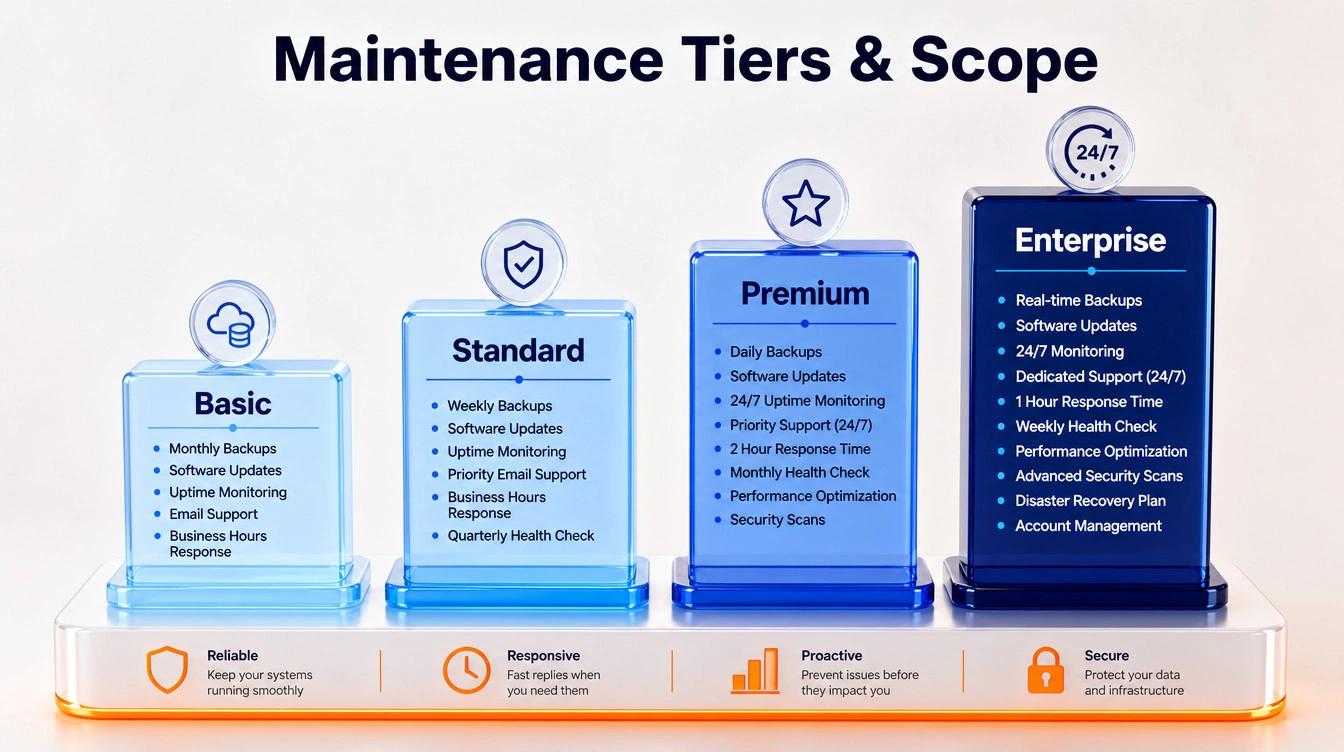
Maintenance providers package their services based on the volume of work and guaranteed response times. You are paying for proactive monitoring rather than reactive fixes.
- Basic Packages (RM 300 – RM 800): Covers monthly backups, basic security monitoring, and minor content updates. Suitable for static service pages.
- Standard Packages (RM 800 – RM 1,500): Introduces weekly backups, priority support, SEO monitoring, and deeper performance optimisation.
- Premium Packages (RM 1,500 – RM 3,000): Includes daily database backups, 24/7 uptime monitoring, advanced firewall rules, and dedicated hours for custom development tasks.
- Enterprise Packages (RM 3,000+): Features custom service level agreements (SLAs), multi-site management, and proactive threat hunting tailored to large corporate networks.
Q: Do these monthly tiers include major structural design changes?
A: No. Maintenance tiers primarily cover security updates and minor text adjustments. A full structural overhaul is treated as a separate custom web development project entirely.
Industry Pricing Standards for 2026
Your business model dictates your maintenance requirements. A local consulting firm requires significantly less technical oversight than an active online retailer.
E-commerce websites demand intensive maintenance due to dynamic product catalogues and the integration of local payment gateways like FPX or GrabPay. These sites usually cost between RM 1,500 and RM 5,000 monthly to maintain. The higher cost ensures payment security compliance and fast loading times, which users now expect after using platforms like Shopee.
Conversely, corporate websites and small SMEs can maintain a strong, secure presence for RM 300 to RM 1,500 monthly. Non-profit organisations frequently qualify for discounted rates from local agencies, keeping their costs on the lower end of that spectrum.
Q: Why does e-commerce maintenance cost significantly more?
A: Online stores process sensitive customer data and dynamic payment requests continuously. Securing transactions and optimising large product databases requires constant, specialised technical oversight.
How Do Local and International Providers Compare?
Many business owners assume they must hire international agencies to secure enterprise-level technical skills. This assumption drains budgets unnecessarily. Malaysian agencies offer a large pricing advantage by operating in Ringgit (MYR), which protects your budget from volatile USD or EUR exchange rates.
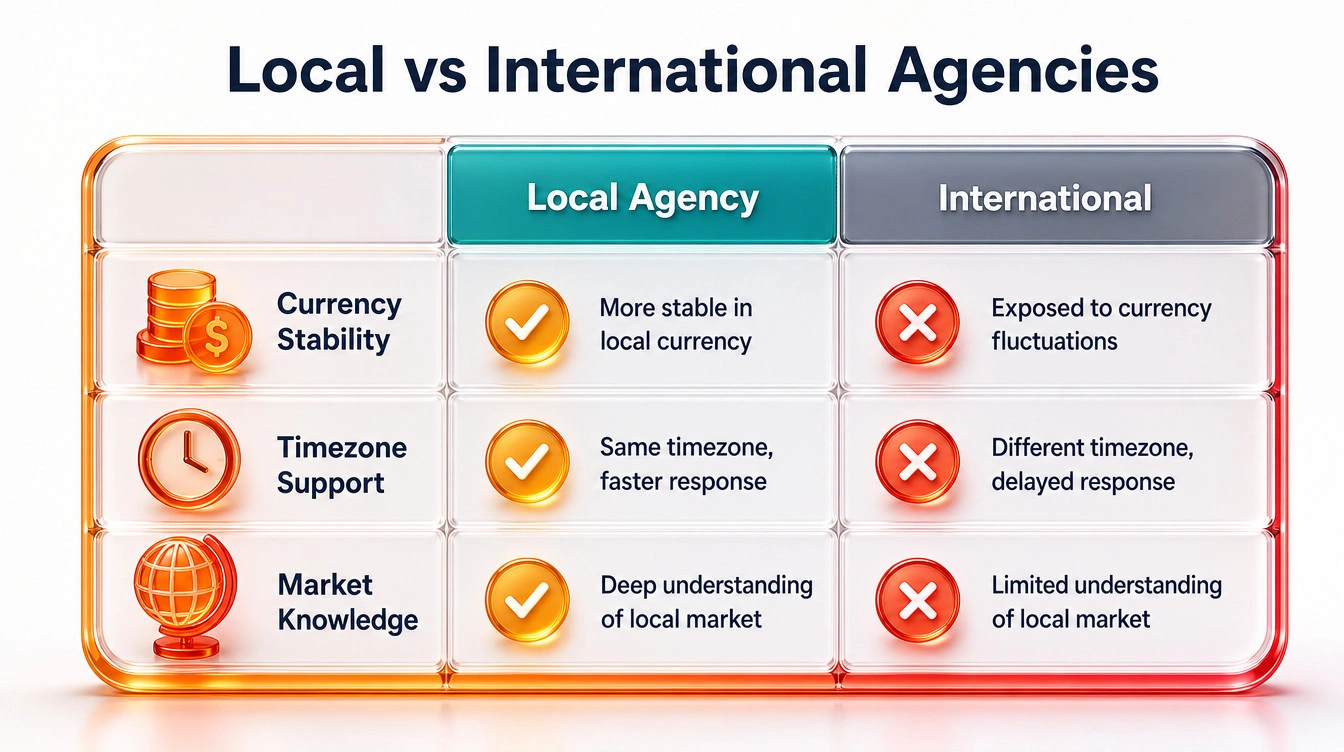
local providers understand the nuances of the Malaysian digital market. They have experience configuring servers for regional traffic and managing local payment API updates. You also benefit from same-timezone support, meaning urgent fixes happen during your business hours.
Q: Are international agencies better equipped for technical issues?
A: Rarely. Leading Malaysian agencies now deploy the exact same enterprise infrastructure. Hiring locally removes time zone friction and guarantees faster communication during critical server events.
The Hidden Danger of “Cheap” Website Maintenance
If you search for “cheap website maintenance Malaysia,” you will undoubtedly find freelancers or budget agencies offering monthly care plans for as little as RM 50 to RM 300. For a small business owner, this looks like a fantastic deal. However, this suspiciously low pricing hides a large operational liability.
How do budget agencies make a profit on RM 50 a month? They cut corners on official software licenses.
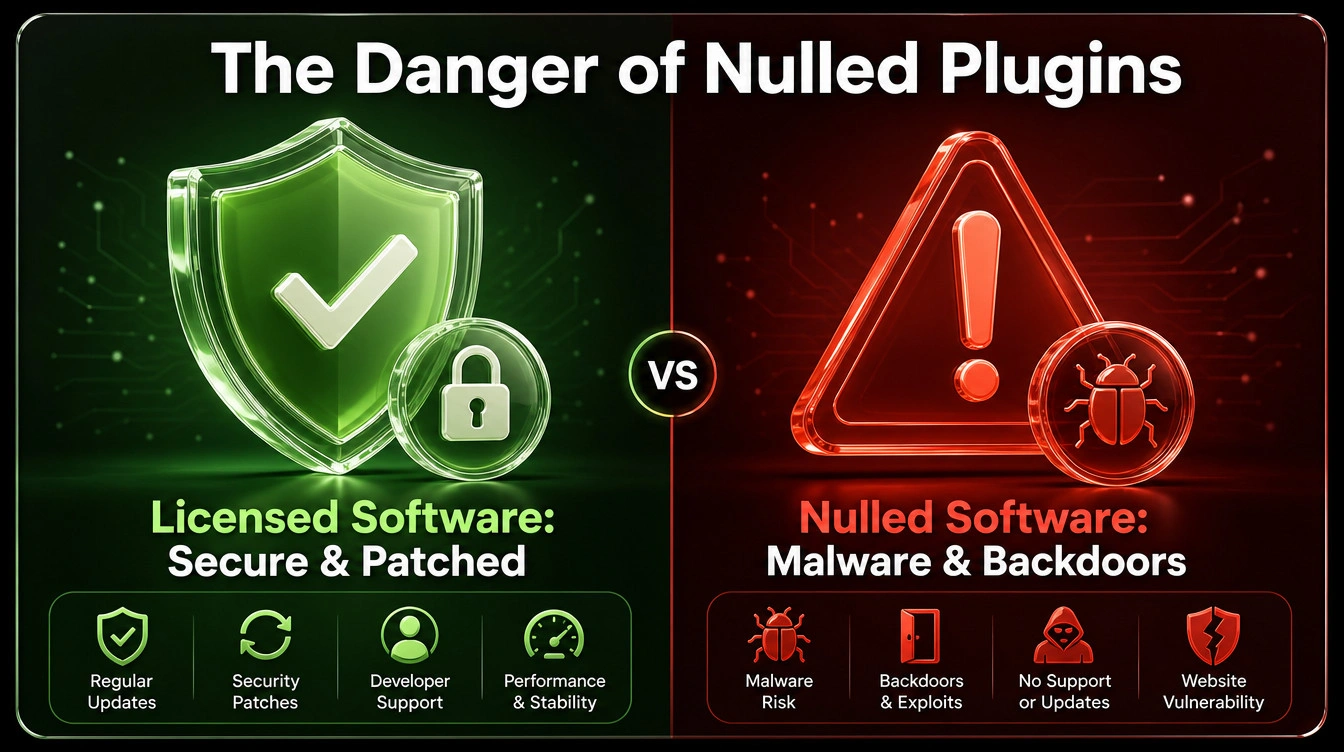
During our routine site audit and analysis for new clients, we frequently uncover a terrifying industry secret. Many cheap agencies refuse to pay for official premium developer licenses. Instead, they install “nulled” or cracked software on their clients’ websites. A prime example is the use of “Pro Elements” to bypass paying for an official Elementor Pro license.
The client believes they are getting a great deal on a premium setup, but they are actually running illegal, modified code. Nulled plugins are notorious for harbouring hidden malware, backdoors, and data-skimming scripts. Because the software is disconnected from the official vendor, it never receives critical security patches.
This means that “cheap” website maintenance actually guarantees a future security breach. If your customers’ personal data is leaked through a backdoor in a cracked plugin, your business is directly liable under the Malaysian Personal Data Protection Act (PDPA).
Q: How can I tell if my agency is using nulled plugins?
A: Ask your agency to provide proof of their active vendor licenses. If they refuse to grant you administrative access to verify the software origins, they are likely using unauthorized, high-risk code.
The Hidden Costs of Neglecting Technical Support
Choosing to ignore maintenance to save money almost always results in higher long-term expenses. The internet is hostile; automated bots scan for outdated software vulnerabilities daily.
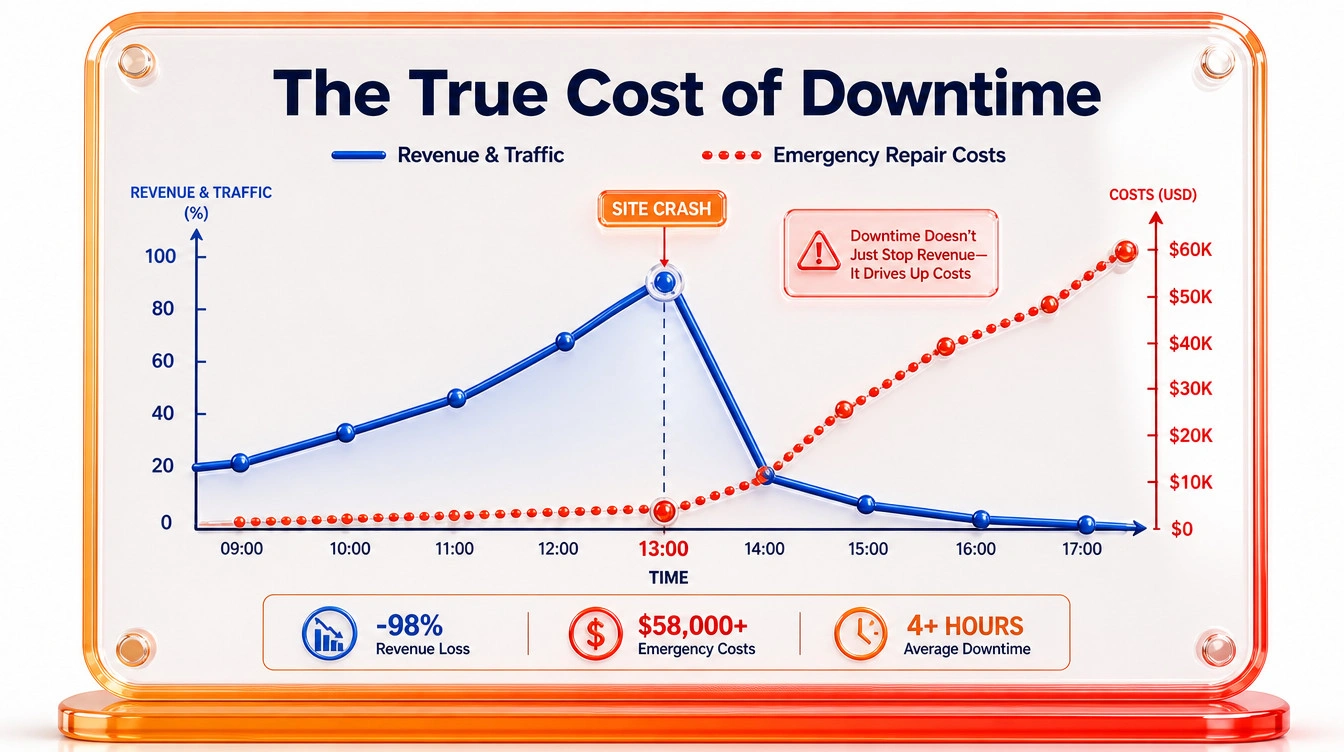
If your site is breached or crashes due to plugin conflicts, emergency repair services in Malaysia typically charge between RM 500 and RM 2,000 just to restore the database. Prolonged downtime also destroys your search engine rankings and halts all inbound lead generation.
failing to protect user data can lead to compliance issues under the Malaysian Personal Data Protection Act (PDPA). Investing in proactive WordPress security and hosting is far cheaper than paying for reputation repair.
Q: What happens if my site goes down without a maintenance plan?
A: You will face emergency recovery fees, which often exceed RM 1,000 per incident. More importantly, you suffer the hidden cost of cheap web development, losing immediate revenue and brand trust.
Selecting Your Technical Partner
Choosing the right maintenance provider ensures your website remains an asset rather than a liability. You need a team that demonstrates measurable performance improvements, not just someone who clicks “update” on plugins once a month.
When evaluating providers, ask them about their backup locations, staging environments for testing new code, and their exact response times for critical outages. Top-tier providers like Ulement offer enterprise capabilities, managing complex infrastructures for local GLCs and universities while keeping prices accessible for growing SMEs. Other notable local options include Webbit and Nexis Novus, which provide solid baseline services for smaller budgets.
Q: How fast should an agency respond to a critical server outage?
A: A professional partner should acknowledge and begin resolving critical outages within one to two hours during business operations. Always verify their exact service level agreement before signing.
Related Ulement guides: Website maintenance and support guide · Website design prices in Malaysia.
Conclusion
Website maintenance pricing should be compared against the work and response responsibility, not only the monthly figure. Put backups, updates, monitoring, restoration, support hours and exclusions in writing. If the provider cannot explain how the site will be recovered, the package is incomplete. Review the operating scope in the WPCare maintenance service.
Frequently Asked Questions
For ongoing operational ownership of this issue, see WPCare’s WordPress maintenance service.